Updated climate target strengthens SEK’s role in the transition
SEK’s Board of Directors has decided to further develop SEK’s strategic climate target. The new wording strengthens SEK’s focus on contributing to its customers’ transition.

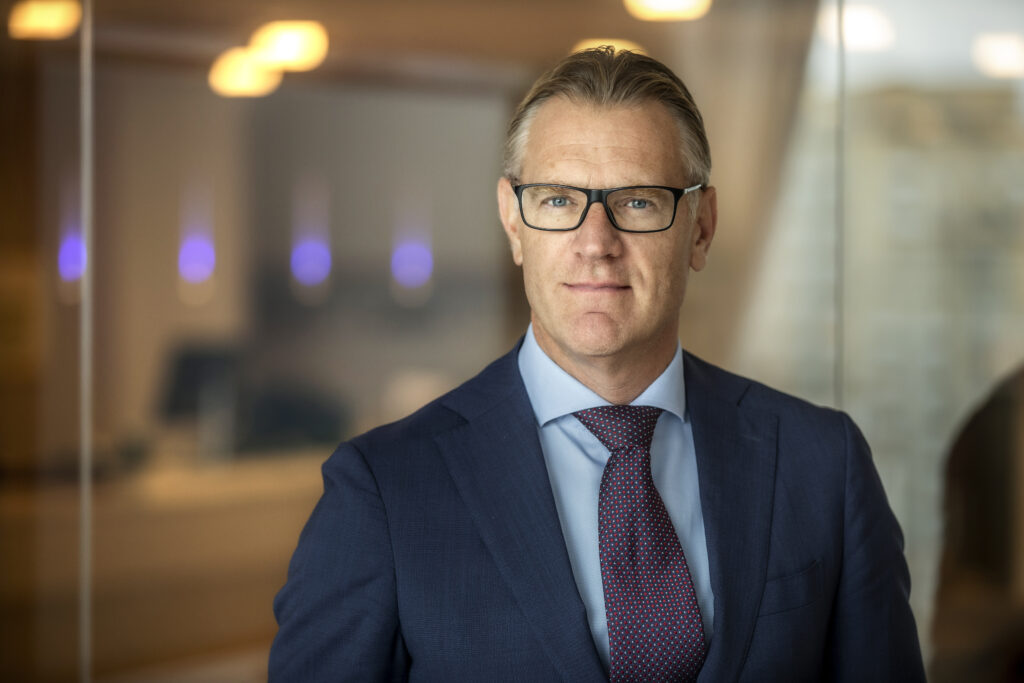
SEK has ambitious climate goals. This includes having phased out virtually all financing of fossil fuels. To continue contributing to the transition in the most effective way, the Board has decided on a strategic target that focuses on where we can make the greatest impact, namely in our customers’ transition, says Magnus Montan, CEO of SEK.
SEK has two strategic sustainability targets. One concerns sustainability-classified lending, which is to amount to Skr 150 billion by 2035. Today, it stands at Skr 54 billion, corresponding to approximately 20 percent of the lending portfolio. The other target concerns how SEK’s lending contributes to the transition in line with the Paris Agreement. It is this target that has now been updated.
Focus on customers’ transition
The updated target states that “SEK’s lending shall contribute to customers’ transition and be adapted to align with the Paris Agreement’s 1.5-degree goal.” The target places a clearer emphasis on customers’ transition.
“With the new target, we clarify our role in the climate transition. SEK will finance investments that support the transition in line with the Paris Agreement. We will enable investments that are necessary for the transition, including in sectors that are difficult to decarbonise. We do not only finance projects that are already aligned with global climate targets and where access to capital is already strong,” says Magnus Montan.
Financing where it matters most
The previous strategic climate target, “to achieve net-zero greenhouse gas emissions for the balance sheet by 2045,” which was set in 2021, risked limiting SEK’s ability to finance important transition projects. Given that SEK’s transactions often span long time horizons, this could in practice have meant refraining from financing operations and investments that are central to the transition, particularly in sectors and projects in early phases of the transition, where capital can make the greatest difference.
“The climate impact of SEK’s lending is largely influenced by external factors, such as the pace of customers’ transition, technological development, regulation and political decisions. The new target is therefore more fit for purpose in guiding our lending activities,” says Magnus Montan.
SEK’s new climate target applies as of 3 June. Progress towards the target will be followed up in SEK’s annual and sustainability reporting.
SEK’s climate strategy in practice
- SEK will phase out fossil fuels from its portfolio. For oil and gas, there is also a sector-specific target: zero financed emissions by 2030 for exploration, extraction and production.
- Climate assessments are a central part of SEK’s credit process. SEK monitors and analyses customers’ climate impact and how their transition is progressing. Through close dialogue and requirements for credible climate transition plans, SEK supports efforts to reduce emissions, including in sectors where the transition is more complex.
- SEK offers a broad range of financing solutions, including green loans and sustainability-linked loans, and works to ensure transparent reporting of its climate footprint.