From security policy to exports – what Europe’s defence build-up means for Swedish companies
Europe’s security landscape has changed fundamentally. Countries across the EU and NATO are strengthening their defence capabilities, while the need for industrial capacity, technology and cross-border cooperation is growing. For Swedish companies, this development creates new opportunities – not least in the German market.
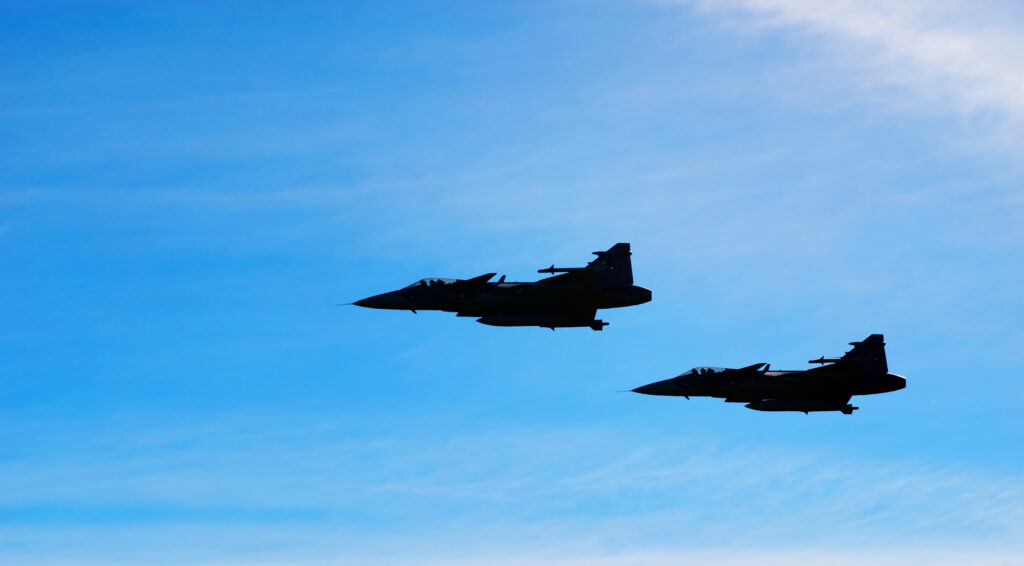
When the Berlin Security Conference brings together European and transatlantic decision-makers in November, one year will have passed since Sweden was the partner country. Since then, cooperation between Sweden and Germany has deepened, while Europe’s defence industry has assumed an increasingly clear strategic role.
What has changed since last year’s conference – and what will it take for Swedish companies to seize the new opportunities?
One year after Sweden took centre stage in Berlin
The Berlin Security Conference has been held since 2001 and has developed into one of Europe’s major forums for security and defence policy. This year’s conference, the 25th, will take place on 3–4 November and bring together political, military and industry decision-makers from Europe, NATO and other partner countries.
When Sweden was the partner country in 2025, Swedish industry was clearly in focus. Team Sweden brought together 17 Swedish security and defence companies and arranged meetings with German stakeholders. Sweden’s presence also came just 18 months after the country joined NATO.
Since then, relations between Sweden and Germany have continued to develop. In connection with the 2025 Berlin Security Conference, the two countries’ defence ministers signed a new memorandum of understanding on defence cooperation. Among other things, the agreement is intended to strengthen cooperation on capability development, defence equipment and industrial collaboration.
At the same time, defence and security have gained an increasingly prominent place in broader Swedish-German cooperation.
Germany takes on a greater role
For Swedish companies, developments in Germany are particularly interesting. As Sweden’s single largest export market, the country already plays a central role in Swedish exports. At the same time, Germany has major ambitions to strengthen its defence capabilities and build up its industrial capacity. For Swedish companies, this means a market with both significant needs and high demands.
– Germany is already one of Sweden’s most important export markets, and the extensive investments in defence and security are opening up new opportunities for Swedish companies, particularly in areas such as digitalisation, AI and cybersecurity. At the same time, competition is fierce, and success requires a long-term approach, a local presence and a strong understanding of how the German market works, says Niklas Grybe of Business Sweden.
Sweden’s NATO membership has also changed the conditions for cooperation. Swedish and German companies now operate within the same alliance and increasingly share a common view of the security challenges facing Europe.
For Saab, these developments mean both a growing market and greater opportunities for long-term industrial cooperation.
– Germany is a strategically important market for Saab and a key player in building Europe’s defence capabilities. Germany’s long-term investments create opportunities for deeper cooperation between Swedish and German industry in technology, production and innovation, says Anders Sjöberg, CEO of Saab Deutschland GmbH.
Swedish-German cooperation already covers several areas. At the 2025 Berlin Security Conference, Prime Minister Ulf Kristersson described Sweden and Germany as countries with a special responsibility and a particular opportunity to contribute to Europe’s future as a modern industrial continent. He highlighted ongoing cooperation in combat aircraft, land vehicles, air defence and naval systems, as well as cyber and quantum technology. (The Prime Minister’s speech at the 2025 Berlin Security Conference – Government.se)
However, for increased investment to translate into stronger European capabilities, political ambition alone is not enough. Industry must be able to develop, produce and deliver – and companies must be able to cooperate across borders.
– Europe’s defence build-up requires companies to increase production and deliver at the pace at which needs are growing. This creates significant opportunities for Swedish companies, but it also requires long-term, predictable conditions and closer cooperation between companies and countries, says Robert Limmergård, Secretary General of the Swedish Security and Defence Industry Association (SOFF).
When the export opportunity becomes tangible
Europe’s defence build-up is not only about advanced weapons systems and new technology. Soldiers’ personal equipment is also an important part of defence capability. The right equipment helps soldiers carry out their duties effectively and safely.
One example is Swedish company Snigel, which develops personal equipment for military and police forces. In 2025, the company completed the delivery of more than 500,000 backpacks to the German Armed Forces.
The contract also demonstrates what it takes to succeed in a larger international market. Major defence contracts place high demands on quality, delivery capacity and the ability to meet the customer’s needs. For Snigel, the delivery to the German Armed Forces has become an important international reference, opening up opportunities in other European markets.
– The deal with the German Armed Forces is important proof of our ability to combine Swedish product development with large-scale delivery. Our strength lies in developing equipment in close dialogue with the people who actually use it. Now that our products are being used by a large number of German soldiers, we are gaining valuable experience that helps us continue to develop. Germany is a strategically important market for us and an important part of our continued international expansion, says Malin Hlawatsch Plaude, CEO of Snigel.
From opportunity to international growth
For Swedish companies seeking to grow in the European market, competitiveness is therefore not only about technology and products. The ability to scale up operations, build delivery capacity and manage larger international contracts is becoming increasingly important.
This can also create new financing requirements.
– When an export transaction grows, capital may need to be tied up in production and deliveries for longer periods. For companies moving from smaller contracts to larger and international ones, financing can become part of what enables them to take the next step, says Johan Nobel, Relationship Manager at SEK.
For SEK, this is part of the broader picture of Swedish exports. Europe’s security and defence build-up is creating demand not only for defence equipment, but also for technology, components, services, infrastructure and resilient supply chains.
For Swedish companies, this may create new opportunities for international growth – but also tougher competition for the business opportunities now emerging.
From security to competitiveness
The 2026 Berlin Security Conference will take place in a Europe where security, industry and the economy are increasingly interconnected.
For Sweden, the question is therefore not only how the country contributes to Europe’s security, but also how Swedish companies can be part of the industrial development.
Cooperation with Germany is an important part of this. But the long-term opportunity extends beyond any single market.
As Europe builds up its defence capabilities, it is also creating a larger European market for companies that can contribute technology, innovation and industrial capacity.
For Swedish export companies, the question is how they can establish a position in that market.
– Europe’s defence build-up is also an industrial build-up that is opening significant export opportunities for Swedish companies. The challenge is to translate Swedish technology and innovation into the production, delivery and financing capacity required for international transactions both large and small. At SEK, it is therefore important for us to stay close to companies, understand their needs and identify where we can contribute, concludes Klas Lindgren Dansbo, Head of Large Corporates at SEK.
Do you want to know more?
Johan Nobel, Senior Client Executive

Do you want to know more?
Klas Lindgren Dansbo, Head of Large Corporates