When global risks become economic realities – what does it mean for Swedish exports?
Geopolitics, trade policy and interest rates continue to affect Swedish export companies. But over the summer, another risk has become increasingly apparent: extreme weather can directly affect production, transport and food prices. At the same time, the Swedish economy is showing signs of a cautious recovery.
What does this development mean for Swedish export companies as they look ahead to the autumn?
In July, Erik Hådén, Head of Investor Relations and Macroeconomic Analysis at SEK, highlighted five questions that would shape Swedish exports this autumn. Since then, several of these questions have taken on new dimensions.
Trade policy remains uncertain, geopolitics is affecting energy markets and trade flows, and Europe’s competitiveness remains high on the agenda. At the same time, the summer has shown how extreme weather can have tangible economic consequences.
– What we are seeing right now is that different types of risks are increasingly interconnected. Geopolitics affects energy prices and trade flows, while extreme weather affects production and transport, which in turn has consequences for inflation and investment. For companies, it is becoming increasingly important to understand how these factors interact, says Erik Hådén.
Interest rates remain unchanged – but inflation is still a concern
On 20 August, the Riksbank left its policy rate unchanged at 1.75 per cent. This means that the focus remains on how the economy and inflation develop rather than on further monetary tightening. The Riksbank’s latest decision means that the policy rate remains at the same level as in June.
Swedish inflation fell sharply in July. CPIF inflation was 0.7 per cent, down from 1.3 per cent in June. At the same time, the picture is more complex when looking at underlying price developments.
This means that Swedish companies are entering the autumn with a significantly less challenging interest-rate environment than a few years ago – but with inflation potentially rising again as temporary downward effects fade.
– The fact that the Riksbank can keep the policy rate unchanged provides better conditions for companies to plan and invest. But it is important not to interpret the current low inflation as meaning that all inflation risks have disappeared. There are factors that could push prices higher again, says Erik Hådén.
Extreme weather becomes an economic issue
The summer has also provided several concrete examples of how weather can affect the economy.
In Europe, prolonged heat and drought have led to record-low water levels in the Rhine, among other places. This has had a direct impact on industrial transport. Vessels have been forced to reduce their cargo loads or shift transport to road and rail, increasing costs. Several German industrial companies have already reported disruptions. Extreme weather is also affecting energy supplies. In France, the Gravelines nuclear power plant was forced to significantly reduce its capacity in August after a massive influx of jellyfish disrupted the water intake for the reactors’ cooling systems. The incident shows how even unexpected weather-related disruptions can affect energy production when high temperatures put pressure on electricity systems.
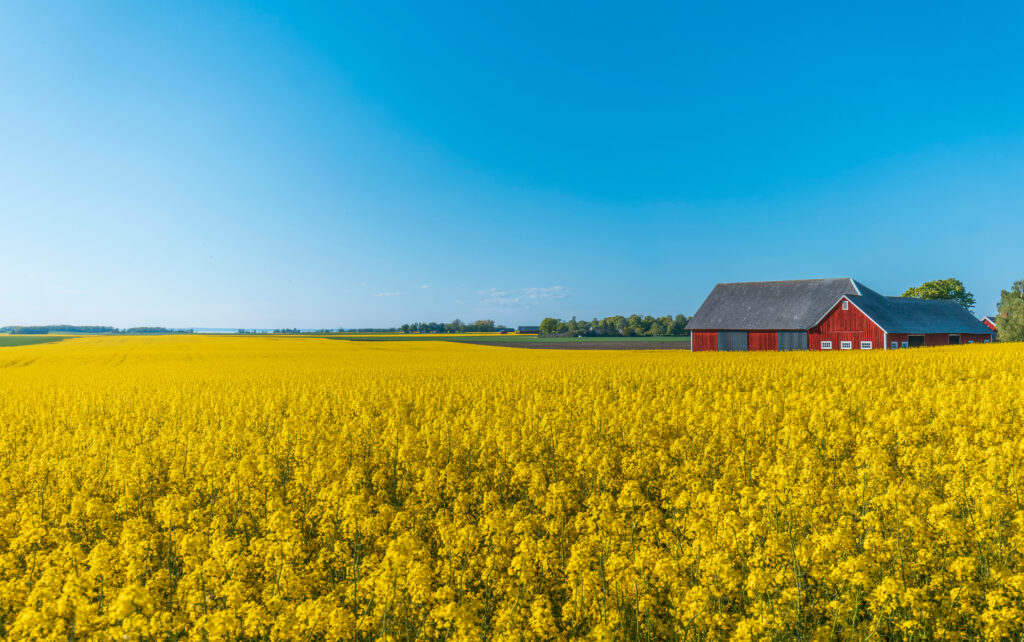
Agriculture is also being affected in several parts of Europe. In France, this year’s maize harvest is expected to be significantly lower following drought and extreme heat, and other parts of Europe have also revised down their harvest forecasts. This makes food a telling example of how climate-related disruptions can spread through the economy: from harvests to prices and transport, and ultimately to inflation.
– Food is a clear example of how a disruption in one part of the economy can spread to other areas. If harvests are affected at the same time as transport becomes more expensive, the consequences extend far beyond agriculture. It is a type of risk that companies need to factor into their long-term assessments, says Erik Hådén.
The latest assessments from the FAO (the Food and Agriculture Organization of the United Nations) nevertheless show that global food commodity markets remain relatively well positioned, supported by factors including large stocks and strong production in several key exporting countries. This means that individual weather events do not automatically lead to a global food crisis.
Where climate and geopolitics meet
Extreme weather is not the only factor affecting food supplies. Wars and conflicts continue to disrupt trade flows, while energy prices and transport costs are affected by geopolitical developments.
This means that companies increasingly need to consider several types of risk at the same time.
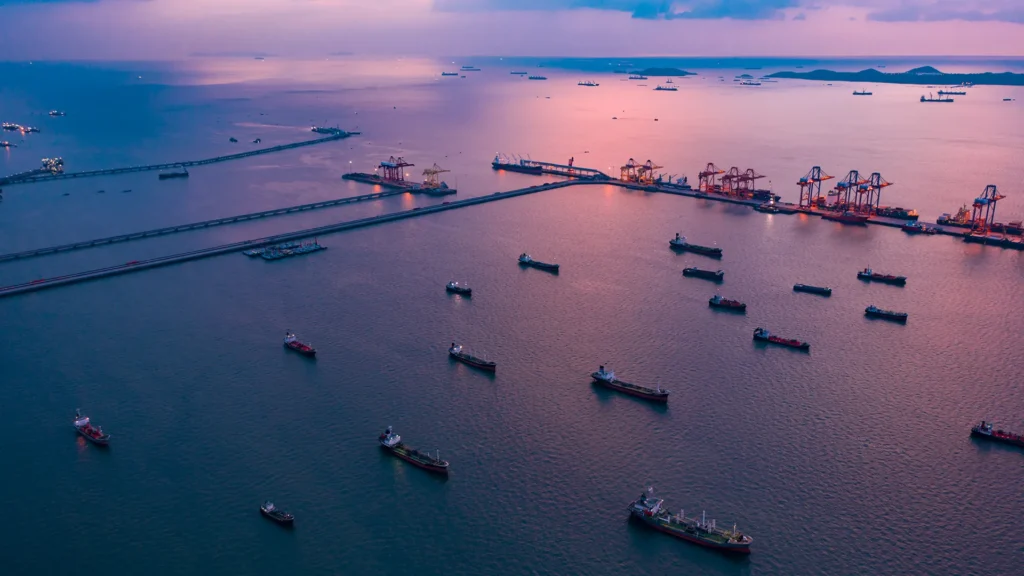
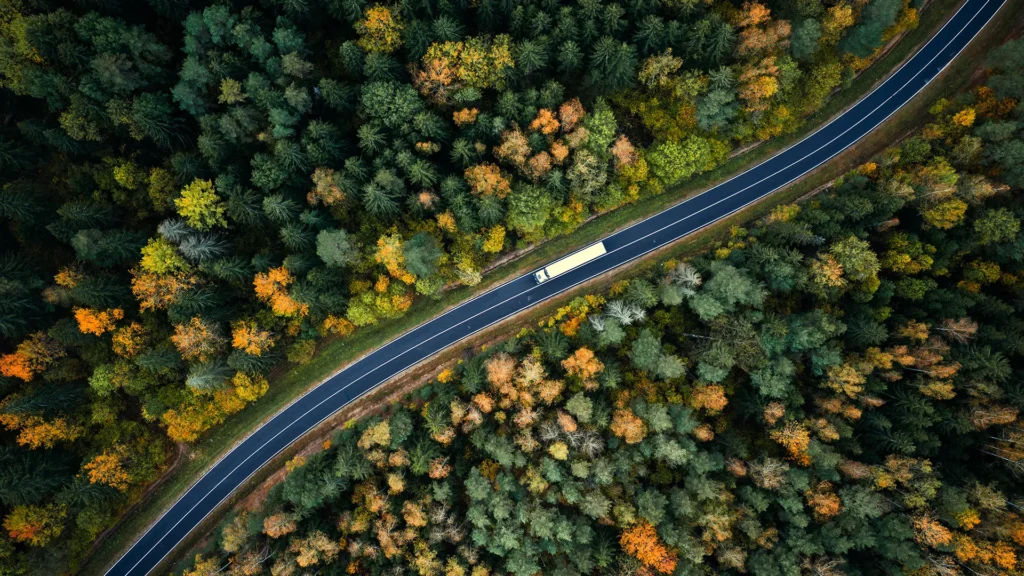
The same applies to other parts of industry. Europe’s key transport routes, energy supplies and access to raw materials can all be affected by weather, geopolitics and trade policy.
– Ultimately, this is about resilience. Companies do not need to be able to predict exactly what disruption will come next, but they need to be able to prepare for different outcomes. Scenario analysis can be an important tool for understanding how the business would be affected if, for example, energy prices, trade flows or access to key inputs were to change, says Erik Hådén.
What does this mean for Swedish exports?
Sweden is a small and open economy. For Swedish export companies, developments in other markets are therefore more important than developments in the Swedish economy alone.
At the same time, there are opportunities in this transformation. Investment in energy, digitalisation, the defence industry, water, food technology and other infrastructure is set to increase as companies and societies adapt to new conditions.
This can create demand for Swedish products, technology and expertise.
– There is a paradox in this development. The risks that create uncertainty can also create new investment needs. When companies need to secure their production, supply chains and energy supply, new business opportunities also arise. Swedish companies have a great deal to contribute in these areas, says Erik Hådén.
The autumn brings both risks and opportunities
As autumn approaches, several of the questions Erik raised in July remain relevant – but the picture has become more concrete.
Trade policy continues to evolve. Geopolitics is affecting energy and trade flows. Extreme weather is showing how vulnerable critical transport and production systems can be. At the same time, the Swedish economy is entering a period with a significantly more stable interest-rate environment.
For Swedish export companies, the autumn is therefore about more than managing individual risks. The wars in Ukraine and Iran also show how quickly geopolitical conditions can change and affect energy, trade and supply chains. It is about understanding how these developments are interconnected, working with different scenario analyses and assessing what investments are needed to continue growing in a more uncertain world.
– Geopolitics is more important than ever, but what we are seeing now is that it needs to be understood alongside other major changes in the economy. For companies that can manage uncertainty while continuing to invest for the long term, there are also significant opportunities, concludes Erik Hådén.